
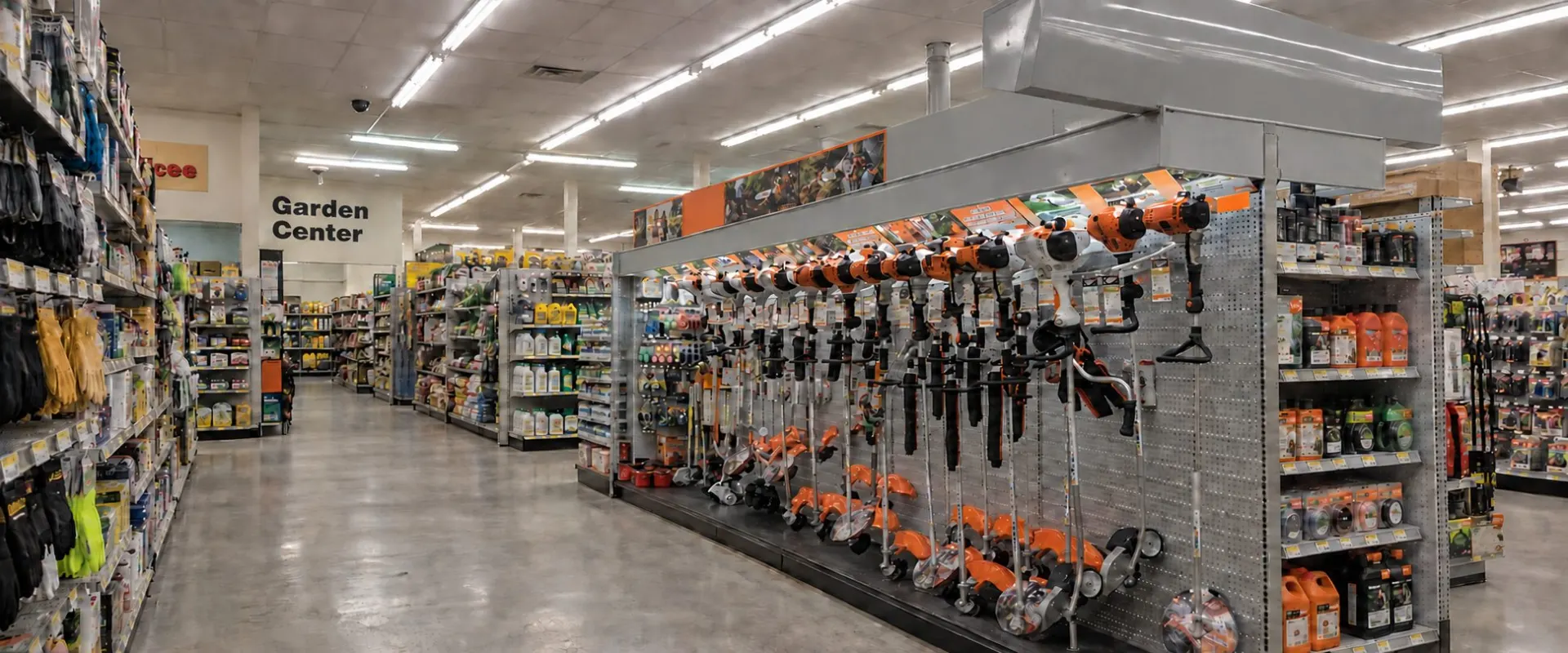
Adding an equipment line isn’t adding a category.
It’s running a dealership inside your store. You already know retail: turns, shrink, buying, merchandising. Equipment sales and service run on different math, and we help you get that right.
Most of what you know still works.
A retailer who runs a tight store already has the habits that matter most: counting things and believing the count, controlling shrink, buying to demand instead of a rep’s enthusiasm, and knowing which end of the store pays the bills.
All of that still applies. What doesn’t is the idea that the new departments behave like the old ones. In four specific ways, they don’t.
Four things that work differently.
Equipment
You don’t control the price on the machine. It’s MAP- and MSRP-bound, the margin is thin, and every price is a phone screen away for the customer. Volume on machines isn’t where the money is.
Parts
Thousands of numbers, hard seasons, supersessions that strand what’s on the shelf, and slow numbers that don’t sell for years. It’s also where the margin comes from, so a general retail markup rule leaves money behind.
Service
You’re selling labor now. A service department is a production line, not a shelf: billed hours against hours paid, work in progress, scheduling and capacity.
Warranty
Warranty claims, co-op funds and rebates are money someone else owes you, each with its own rules and deadlines. They expire if nobody chases them, and none of it shows clearly on a retail P&L.
What usually goes wrong first.
None of these are mistakes exactly. They’re good retail instincts applied to a business that doesn’t reward them.
The first one matters most, for a reason you already know: the money is made on the buy. That doesn’t change. What changes is what a good buy looks like when the catalog runs to thousands of numbers you’ve never carried.
Stock gets ordered blind
A part goes on the shelf because a customer asked for it once, a rep recommended it, or it came on a stocking order nobody questioned, with no idea how it sells, no stocking level and no allowance for season. It becomes obsolete three years later, but the money was spent the day it was ordered.
Parts get the store’s markup
One rule across thousands of items that sell at very different speeds and get very different price scrutiny. Buying decides what you own; pricing decides what you earn on it.
Service gets written off
Nobody measures it, so everyone assumes it loses money. More on that below.
It all goes in one number
Blended into a store-wide margin, an equipment department can underperform for years without anything looking wrong.
The cheapest time to fix it is now. Most of what goes wrong in a new equipment department is set in the first year: how parts get priced, how service gets measured, what gets counted. Fixing it later costs far more than getting it right.
The department you didn’t ask for can be the best one you have.
Almost nobody adds equipment because they wanted a service department. It came with the line: the manufacturer required it, so you hired a technician, cleared some floor and got on with selling machines.
Nothing about running retail prepares you to price labor, cost it or track it. So the rate is whatever the shop across town charges, the cost of an hour is never worked out, and everyone assumes service is something you carry, not something that earns.
Staffed to the work, stocked so jobs aren’t waiting on parts, and measured on billed hours, a service department can be the most profitable part of the business. It earns a higher margin than the machines, and it pulls parts across the counter with it.
It’s a measurement problem before it’s a management problem. Hardly anyone runs a bad service department on purpose. Most have never been shown what a good one looks like.
Questions to settle before the first season.
Who does what, how the departments work together, and which numbers you’ll watch. Settle these early and most of the first-year mistakes never happen.
| Area | Decision |
|---|---|
| Responsibilities | Who owns buying, pricing, claims and how the department performs? |
| Processes | How will purchasing, receiving, inventory and service work together? |
| System setup | Can each department be measured on its own, not lost in the store total? |
| Visibility | Which numbers get reviewed, by whom, and how often? |
Before the first season, or after a hard one.
Planning the addition
Set up buying, pricing, service and warranty before your first season, so the department starts with the right habits and you skip the expensive first year.
Already carrying equipment
Had a season that didn’t go to plan? We’ll find what’s costing you, fix the setup, and fold the equipment side into how the rest of the store runs.
Where people usually start.
It depends on how far in you are, and whether the problem is knowing what to do or having the time to do it.
Find out where you stand
Reporting built on your own numbers: your parts margin by department, what isn’t selling, and what it’s costing.
Set it up properly
Consulting on how the departments are set up, priced and measured, before habits harden into the way it’s always been done.
Teach the people running it
Your parts person and service writer may be excellent retail people who’ve never been shown what good looks like in a dealership.
More on adding an equipment line.
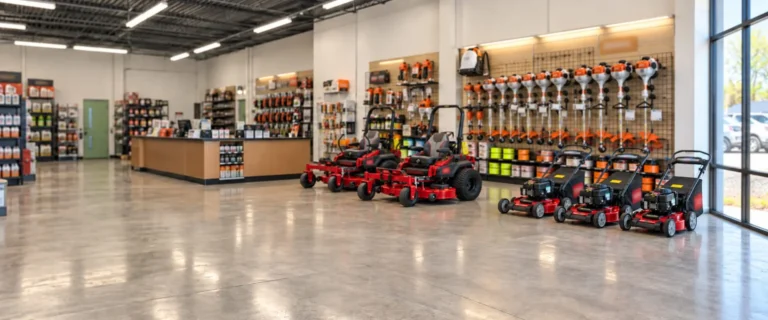
What Adding an Equipment Line Really Takes
A new equipment line is a dealership inside your store. The machines are the part everyone sees. Parts, service and warranty decide whether it earns anything.

Effective Labor Rate: What It Is and How It Compares to Your Posted Rate
The rate on the wall is what you charge for an hour that gets billed. What the shop actually earns per hour is a different number, and the gap between them is where service profit goes.
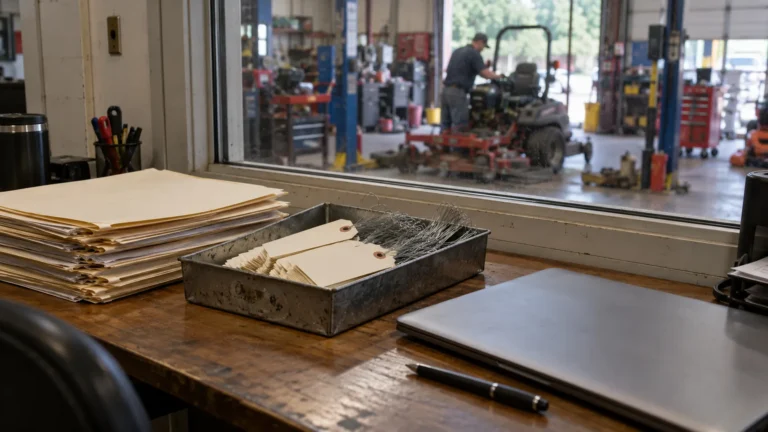
Warranty Claims Are Money You’re Owed
Warranty work is done, the customer leaves happy, and the claim gets filed late, short or never. Treat warranty claims as receivables and the money stops slipping away.
Free download: New Line Readiness Worksheet →
You did the hard part already.
You took the line on and got it selling. Making it earn what it should is a smaller job than that one. Detailed analysis and findings are paid work, with scope and price confirmed in writing first.
(770) 215-4484hello@profitedgesystems.comPick a time on the calendar →
